The shift

Nick might not be the kind of person you'd expect to meet at a psychedelic retreat, on the surface of things.
He comes from the finance world. A former military guy. Probably not the image that comes to mind when you first think "psychedelics."
But he's joined us. Not just once, but twice (so far). And we thought he'd be perfect to kick off a series where we'll be sharing real-life experiences from people who have been to — and been changed by — Alalaho.
A little glimpse of life at (and after) retreat.
I sat down with Nick on Zoom a couple of weeks ago to ask him about his time at Alalaho, and what's shifted for him since he joined us.
Here's what he had to share:
Q: What brought you to Alalaho in the beginning?
A: I’d been doing talk therapy for a couple of years. Subconsciously, I knew I wasn’t quite where I wanted to be. I didn’t feel very present, I didn’t feel very connected to the world. Something wasn’t right.
The problem I found with talking therapy was that if you’re used to using your mind a lot, it can just go in circles. You can rationalise anything and sort of think you’ve solved the problem — but actually you’ve gone nowhere near it.
The big turning point for me was after a breakup. All these emotions came erupting out. That was the real realisation: everything’s not okay. I keep repeating the same patterns in life, and I don’t want to do that anymore.
What I’d been doing wasn’t helping me connect with myself or understand why I kept repeating those patterns. A friend of mine had done Alalaho in the Netherlands back in 2017. He’d mentioned it to me, and I was always interested, but there was too much fear around it. Psychedelics weren’t part of my background, so I never took it further.
After everything happened, I thought: I can’t keep doing this. I need to do something different. I’ll be honest — I was very scared. It’s not legal in the UK, so you wonder how legitimate it is. But because my friend had done it, and because of where I was mentally, I decided to go.
Q: What shifts did you notice after your retreat?
A: I think one of the biggest shifts after the first retreat was I stopped ruminating so much. I stopped trying to solve the past, stopped constantly trying to solve the problem of life in my head. Going back and beating myself up over decisions I’d made — I just don’t do that anywhere near as much anymore.
My mindset has shifted as well. Before, I think I had a very defensive mindset. Now I feel I’ve got a much more open mindset, more of a growth mindset in the way I look at things. I don’t see people as a threat in the same way I used to.
It’s hard to put into words — it feels like I’m rediscovering myself, slowly peeling away the layers I put in place over life. Actually rediscovering who I really am. If you take the fear away and you take the layers away and you take every time something happened to you when you were vulnerable and it didn't go the way he wanted to, so you just put more more walls up, more armour up rather than embracing it and realising there's not a right answer.
Instead of trying to lock myself away or put up defenses, I'm trying to actually take them down. To open up into the world and and and do that in a way where you're kind and empathetic to yourself and the parts of you that are scared, rather than forcing them and and maybe bullying them like I maybe would have done when I was in the army, where any perceived weakness wasn't okay.
I even had my acupuncturist, who I’ve known for years, say to me: your tone of voice has changed, your body posture has changed, your whole energy has changed. And you think, wow. It’s like the tip of the iceberg — those little visible signs of a huge internal change. The way I hold myself, the tension in my shoulders, the way my body moves. I’m more expressive now, even with my hands. And I think, was I really that closed off? Was I really that shut down in life? And the answer is yes — I really was.
That affects your whole energy. If you’ve got a closed, defensive mindset, it shapes the way you interact with life. And if you’ve got an open, positive mindset, that shapes everything too — what turns up for you, how you interact with people, how you see things.

Q: You've just done your first Returners retreat. What made you decide to come back?
A: I had this growing sense that there was more to discover. I still sometimes find it hard to tap into that on my own, and I knew there were more layers, more depth, more things holding me back from childhood, university, the army. This isn’t a one-and-done kind of thing. There’s more to sit with, more to experience, more to let myself just be me. That felt very important.
And that’s what pulled me back, and what will pull me back again. Everyone finds their own way, but this really works for me. When I talk to other people, some things they do don’t speak to me — but this does. I know I’ll keep going back, because it helps me.
It’s like melting ice — a thawing of a glacier. I live a busy life, busy job, all of that, and the retreats really help me step back and sit with myself again.
Q: How was your second retreat different from the first?
A: I think the big difference was fear — or maybe not fear exactly, but uncertainty. The first time it was a huge step into the unknown for me. I’d never done psychedelics before, so I didn’t know what was going to show up.
On the returner’s retreat, I didn’t have that anymore. I felt more nervously excited, intrigued about what might come up, but without the same nervousness. I knew the set and setting, I knew what the people would be like, how it would go. I wasn’t nervous about meeting a whole new group of people.
The trip itself was difficult, but not in a bad way. Difficult because those emotions come back, but that’s the point — it’s all reconnecting with myself. The crying, the sadness — I see all of that as good stuff.
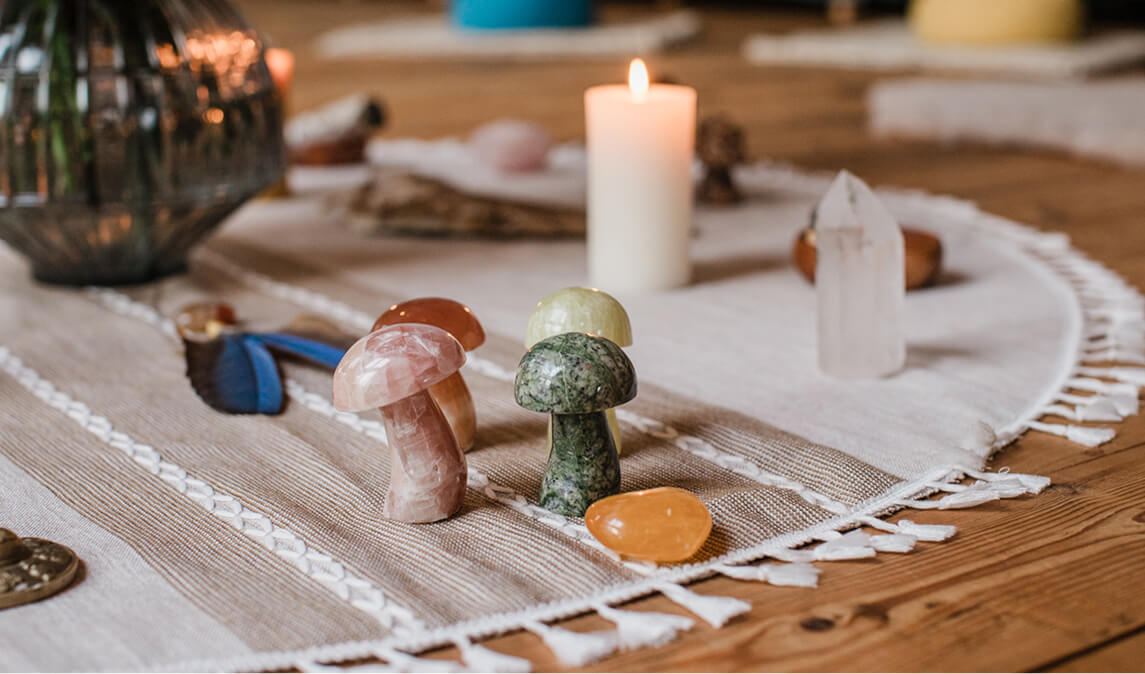
I also really enjoyed the returner’s retreat itself. The pods, the movement, the sharing circles — I felt so much more comfortable, more open, more able to lean into it all. The first retreat made me comfortable with being vulnerable and sharing, and so when I came back the second time, I was actually excited for it.
You meet such fascinating people. And it's great because you meet these fascinating people and you realise that you're not a weirdo. There's nothing wrong with you. I think it's a wonderfully human experience when you you can sit in that circle and listen to someone tell their story. I think it's really beautiful thing to see humans interact like that.
Q: How would you describe Alalaho to someone who has never been?
A: Magical is the first word. Magical, safe, secure, warm, held, seen, cared for — I think it’s all of those things. I know it probably sounds like a cliché, but it really feels like a little oasis. You walk in and it’s almost like stepping into a different world for four or five days, and you walk out having discovered so much about yourself.
I think it’s wonderful. I’ve shared it with a lot of people and said, if you were ever to think about this, this place is absolutely fantastic. I felt very well looked after.


You may also like...


14 November 2026
Integration
Meditation
Microdosing on wisdom

14 February 2026
Integration
Tools & Practices
What integration (really) looks like
Get the Glimpse
Our newsletter, where we share our best insights and tools for exploring the universe within —through psychedelics, meditation, psychology, and more.
Plus you'll be first to hear whenever we add new retreats or dates.